Tulu Health has officially arrived in the United States. And with every new market, the right people matter more than the product.
We started building Tulu Health in India — a market where healthcare complexity is measured not in millions of patients but in billions. Fragmented systems, variable payer landscapes, seven-plus spoken languages in a single catchment area, and clinical workflows built on decades of institutional memory. It is not an easy market to build AI for. That's exactly why we started there.
The lessons from India — around earning trust, integrating without disrupting, and proving ROI on a tight timeline — turned out to travel well. We took them to the UAE, then to Southeast Asia. At each new market, the surface-level challenges looked different. But the underlying problem was the same: hospitals are losing revenue they don't know they're losing, and they're doing it quietly, at scale, every day.
Why the US, Why Now
The US healthcare market is, in many ways, the hardest version of the problem we've been solving. Revenue cycle management alone is a $250B+ industry. US hospitals lose an estimated $262 billion annually to claim denials — and recover only half of it. No-show rates average 18-22% in outpatient settings. Patient leakage to out-of-network providers is a chronic margin problem for integrated delivery networks.
The tools that exist today — legacy RCM software, bolt-on AI features from EHR vendors, standalone chatbots — were not built for the scale or complexity of what US hospitals face. They patch individual problems. They don't connect the full patient revenue lifecycle from first inquiry to final claim adjudication.
That's what we've built. And after 40+ integrated delivery networks across three continents, we have the evidence base to show it works.
The People Matter More Than the Product
I've said this to our team many times, and it's as true now as when we started: entering a new healthcare market is not a product problem. It's a trust problem. You cannot deploy AI inside hospitals without people who understand the clinical, operational, and regulatory context of that specific market.
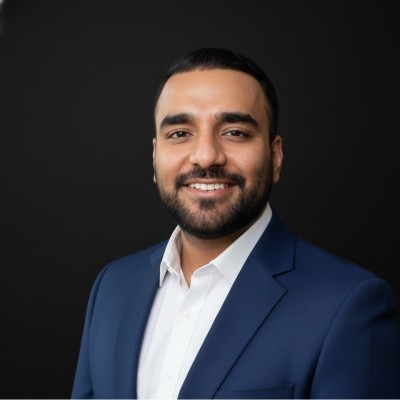
That's why, as we enter the US, we're building the advisory and clinical team first. We're proud to be welcoming Dr. Raj Sankar, MD, MHA — a physician, entrepreneur, and operator with 15+ years of experience across clinical care, healthcare operations, and business transformation in the US — as we begin building AI and fintech infrastructure for hospital growth, care operations, and revenue cycle management here.
Dr. Sankar has seen both sides of the equation: what clinicians need and what administrators are held accountable for. That combination of perspective is rare, and it's exactly what's needed to ensure that what we build in the US doesn't just technically function — it actually gets adopted.
"Every new market is a new chance to prove that the right AI, in the right hands, changes what's possible for patients.
What We're Building in the US
Our focus in the US market mirrors our global approach: four AI workforce products that target the four biggest hospital revenue problems.
All four products share a single data layer, connect to your existing EHR via FHIR/HL7, and can be deployed in sequence — starting with whatever is costing your hospital the most money right now.
We're currently onboarding our first US health system partners. If you're a hospital leader, health system CFO, or CMO interested in seeing what this looks like in practice, I'd like to talk.
Dr. Adil Khan
Founder & CEO, Tulu Health — Building AI colleagues for hospital operations. Headquartered in New Delhi with US offices in Delaware.
Follow on LinkedIn →Interested in being an early US partner?
We're onboarding our first US health system partners now. 30 minutes to show you what we've built and what it could mean for your margins.
Book a 30-Minute Demo