Still early. Still learning. But one thing is clear while building Tulu Health: the hard part isn't AI. It's earning trust inside workflows that have evolved over decades.
When you first walk into a hospital — not as a patient, but as a technology builder — you notice something quickly: the gap between how operations look on a diagram and how they actually run in the real world.
On paper, there's a structure. There are SOPs, reporting lines, handoff protocols. But in reality? There are missed calls that nobody has time to return. Follow-ups that slip because the coordinator is managing fifteen other things at once. Systems that were built in different decades that technically "integrate" but share data in ways that require a human to make sense of them.
This is the world we build in. And it took us a while to understand that the challenge was never the AI.
What "Messy" Really Means
Hospital operations are messy — not because the people running them are incompetent. The opposite is true. They are messy because they evolved organically, under pressure, over years. Every workaround exists because someone once ran out of time and found a faster path. Every informal process was once someone's clever solution to a rigid system.
When you introduce AI into this environment, you're not walking into a blank slate. You're walking into a living system with memory. Staff have seen technology "transformations" before. They've watched enterprise software projects fail, replaced by more manual processes than they started with. They've been trained on tools that disappeared after the first budget cycle.
So when we show up and say "AI can handle your patient intake, follow-ups, and no-show prevention" — the question isn't whether the technology works. The question is: why should they believe us?
psychology What We've Learned About Trust in Healthcare AI
-
Trust is earned in sprints, not proposals. No hospital leader trusts a demo. They trust a result. Showing one tangible outcome — a recovered no-show slot, a claim that didn't get denied — builds more confidence than any slide deck.
-
The staff who resist are often the ones who care most. When a nurse coordinator pushes back on AI-driven scheduling, it's usually because she's seen patients fall through cracks when systems didn't account for context. That pushback is signal, not noise. It makes the product better.
-
Ownership changes everything. When a department head feels like the AI is theirs — tuned to their patients, their terminology, their protocols — adoption rates go up dramatically. Tulu Health deploys forward-embedded engineers for exactly this reason.
Start Small. Fix Ten Painful Things.
The insight that's shaped how we build came from a conversation with Som Mittal, former President of NASSCOM, alongside Dr. Jagadeesh Ramasamy and Dr. Balu Krishna Sasidharan at CAHOTECH. Someone asked: when does AI actually get adopted in hospitals?
The answer wasn't "when the technology is good enough." The answer was: when it quietly fixes ten small, painful workflows that staff have given up trying to solve.
Not a revolution. A quiet accumulation of small wins. Nobody picks up a call? AI does it and logs it. Patient didn't respond to a follow-up reminder? AI sends it at the right time in the right language. A referral leaked out of network? AI flags it at the moment of decision, not six weeks later in a report.
Each of these fixes is almost invisible. But together, they change the culture. Staff stop working around the system and start working with it. And that's when real adoption happens.
"AI in hospitals will not start as a revolution. It will start by quietly fixing ten small, painful workflows.
Healthcare Isn't a One-Size-Fits-All Problem
One thing we've had to unlearn: the assumption that what works at one hospital scales directly to the next. It doesn't. A tertiary care hospital in Delhi has completely different patient communication norms than a specialty center in Hyderabad. A multi-specialty network in Malaysia has different data sovereignty requirements than a hospital group in the UAE.
Building for this forces you to rethink a lot of assumptions around scale, ownership, and reliability. You can't just deploy once. You have to re-earn trust in every context.
That's harder to build. It's slower to scale. But it's the only way that works.
Where We're Headed
We're still early. The honest version of Tulu Health right now is a team that has figured out how to earn trust in complex hospital environments, build AI that integrates without disrupting, and show results quickly enough to survive the inevitable skepticism.
The technology — the AI agents, the LLM orchestration, the real-time claim scrubbing — that part keeps getting better and will continue to. But the capability that's actually hard to replicate is the understanding of how hospitals work: the politics, the handoffs, the moments when a coordinator makes a judgment call that no algorithm has ever been trained on.
That's the moat. Not the models. The trust.
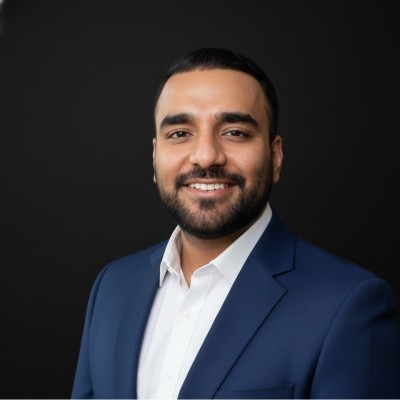
Dr. Adil Khan
Founder & CEO, Tulu Health — Building AI colleagues for hospital operations. Previously in clinical care, healthtech, and hospital systems across India, UAE, and Southeast Asia.
Follow on LinkedIn →See how Tulu Health earns trust at your hospital
We start with your highest-ROI problem. You see results in the first 30 days or we don't move forward.
Book a 30-Minute Demo